A good kitchen knife makes cooking faster, safer and more enjoyable. A dull or poorly balanced knife, on the other hand, slips more easily and makes simple tasks frustrating. With so many styles, steels and price points available, it helps to know what actually matters. This guide covers the key things to consider before you buy.
1. Start With the Right Type of Knife
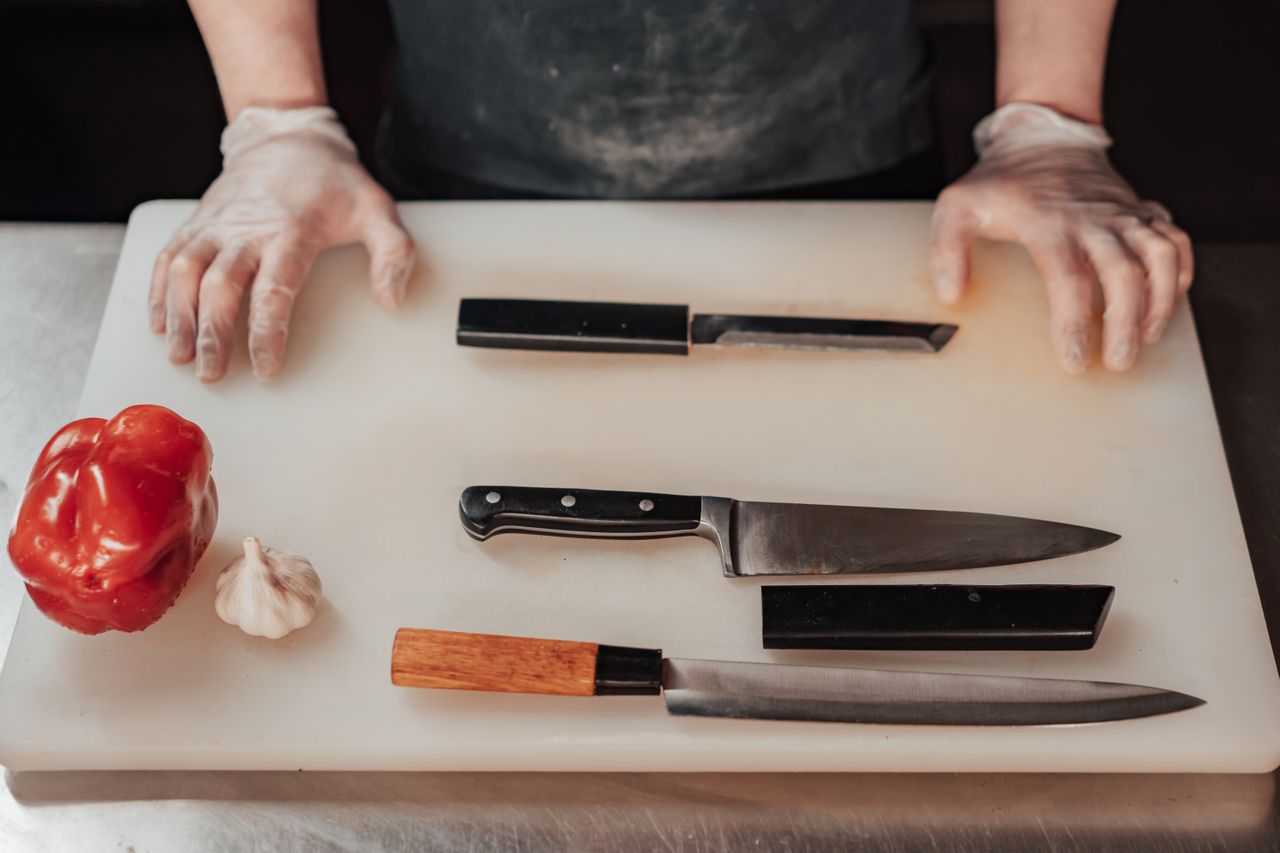
You do not need a huge block of knives. Most home cooks can handle almost everything with three:
- Chef’s knife (8 inches / 20 cm): the all-rounder for chopping, slicing and dicing.
- Paring knife: a small knife for peeling, trimming and detailed work.
- Serrated bread knife: for bread, tomatoes and other foods with tough skins and soft insides.
A santoku is a popular Japanese-style alternative to a chef’s knife, with a flatter edge that suits push-cutting.
2. Blade Material
| Material | Pros | Cons |
|---|---|---|
| Stainless steel | Resists rust and stains, low maintenance | Softer types need sharpening more often |
| High-carbon stainless steel | Sharp, durable, good balance of edge and care | Usually more expensive |
| Carbon steel | Very sharp, easy to sharpen | Can rust and discolor without careful drying |
| Ceramic | Very sharp and lightweight | Brittle, can chip, hard to sharpen at home |
3. Forged vs Stamped Blades
Forged knives are shaped from a heated piece of steel, are usually heavier and often have a bolster for balance. Stamped knives are cut from a sheet of steel; they are lighter and usually cheaper. Both can be excellent; choose the weight and feel you prefer.
4. Handle Comfort and Grip
The handle should feel secure and comfortable, even when your hands are wet. Wood, composite and synthetic handles all work well. If possible, hold a knife before buying to check that it fits your hand.
5. Balance and Weight
A well-balanced knife feels steady in your hand, often with the balance point near where the blade meets the handle. Heavier knives power through tough foods, while lighter knives are less tiring for long prep sessions. There is no single right answer; it is personal preference.
6. Full Tang Construction
A full tang means the steel runs through the entire handle. It generally adds strength and balance, and is a good sign of quality in many Western-style knives.
7. Edge and Maintenance
- Western-style knives usually have a slightly wider edge angle that is durable and easy to maintain.
- Japanese-style knives often have a sharper, narrower angle that cuts precisely but needs more care.
- Use a honing rod regularly and sharpen your knife a few times a year with a whetstone or a quality sharpener.
8. Budget
You do not have to spend a fortune. A single good chef’s knife in the mid-price range usually serves better than a cheap set of many low-quality knives. Invest most in the knife you will use every day.
Knife Care Tips
- Hand wash and dry immediately; dishwashers can dull and damage blades.
- Use wooden or plastic cutting boards, not glass or stone.
- Store knives in a block, on a magnetic strip or with blade guards.
The Bottom Line
When buying a kitchen knife, focus on the type you need, blade material, comfort, balance and how much maintenance you are willing to do. One well-made chef’s knife, kept sharp, will handle most kitchen tasks for years. For more kitchen tips, see how to clean a garbage disposal.
About the Author