How to Get Better Quality Sleep: The Complete Guide to Sleep Hygiene and Health
Getting better quality sleep is one of the most powerful and underappreciated steps you can take to improve both your health and your appearance. In a society that glorifies long working hours and treats rest as a sign of laziness, sleep is consistently sacrificed — and the consequences show up not just in how people feel, but in how they look. Dark circles, dull skin, premature aging, and a generally tired appearance are all visible signs of poor sleep. But the effects go far deeper than aesthetics. Understanding how to get better quality sleep is one of the most impactful investments you can make in your long-term wellbeing.
Why Sleep Quality Matters More Than Sleep Duration
Most people assume that getting enough sleep is simply a matter of hours — sleep eight hours and you are fine. But this is a significant misconception. The quality of your sleep matters far more than the quantity. You can spend nine or ten hours in bed and still wake up feeling exhausted if those hours are not spent in the deep, restorative cycles of sleep your body and brain require.
People who do not get adequate quality sleep are significantly more likely to become overweight and develop chronic conditions such as diabetes. They face a higher incidence of mental health conditions including depression and anxiety. They also experience elevated rates of congestive heart failure and drug-resistant hypertension. These are not minor inconveniences — they are serious, life-altering health outcomes directly linked to poor sleep quality.
Sleep is also deeply interconnected with other aspects of your life. Your dietary patterns, stress levels, physical activity, personal habits, and social connections all influence the quality of your sleep — and poor sleep in turn affects all of those same areas. If other parts of your life are in significant disarray, simply sleeping more hours is unlikely to solve the problem. Sleep quality is a reflection of overall lifestyle balance, not just a single independent variable you can adjust in isolation.
The Connection Between Sleep, Insulin, and Melatonin
One of the most important and least understood factors in sleep quality is the relationship between insulin levels, melatonin production, and the depth of your sleep cycles. Eating a large meal — especially one high in sugar or refined carbohydrates — before bed causes insulin levels to spike. Elevated insulin levels interfere directly with your body’s ability to convert L-tryptophan into melatonin, the hormone that regulates your sleep-wake cycle and is essential for falling into deep, restful sleep.
High insulin levels also suppress the secretion of human growth hormone during sleep — a hormone that plays a critical role in cellular repair, muscle recovery, and overall physical restoration that occurs while you rest. Perhaps most significantly, elevated insulin prevents you from entering the deeper, more restorative REM sleep cycles that are essential for waking up feeling genuinely refreshed and mentally sharp. This is why what you eat in the hours before bedtime has such a direct and measurable impact on how well you sleep.
Foods and Substances to Avoid Before Bed
Avoiding a large meal before sleep — particularly one high in sugar — is one of the single most effective dietary changes you can make to improve your sleep quality immediately. The insulin spike caused by a high-sugar evening meal creates a cascade of hormonal disruptions that prevent you from reaching the deep sleep stages your body needs for physical and mental restoration.
Alcohol is another substance that significantly disrupts sleep quality, despite the fact that many people use it as a sleep aid. While alcohol does make you feel drowsy initially, it prevents you from entering deep REM sleep — meaning you may stay in bed for eight hours but wake up feeling as though you barely slept. The restorative benefit of sleep is lost when REM cycles are disrupted, regardless of total sleep duration.
Stimulants including nicotine and caffeine should also be avoided in the hours leading up to bedtime. Both substances increase alertness and elevate heart rate, making it harder to fall asleep and reducing sleep depth when you do. Over-the-counter and prescription sleeping pills present a similar problem — while they may help you fall asleep faster, many commonly used sleep medications also suppress REM sleep, leaving you groggy and unrested despite a full night in bed.
Managing Light Exposure for Better Melatonin Production
Light exposure in the evening is one of the most powerful and often overlooked factors in sleep quality. Your brain relies on darkness as a signal to begin producing melatonin and prepare for sleep. Artificial light — from televisions, computers, tablets, smartphones, and other screens — sends the opposite signal, suppressing melatonin production and keeping your brain in an alert, wakeful state long after you intend to wind down.
The blue light emitted by modern screens is particularly disruptive to melatonin production. Spending time on your phone, tablet, or laptop in the hour or two before bed sends strong wakefulness signals to your brain that directly counteract your body’s natural sleep preparation process. Reducing screen time in the evening, using blue light filters on your devices, and switching to warmer, dimmer lighting in your home as bedtime approaches are all practical steps that can meaningfully improve your ability to fall asleep and reach deeper sleep stages.
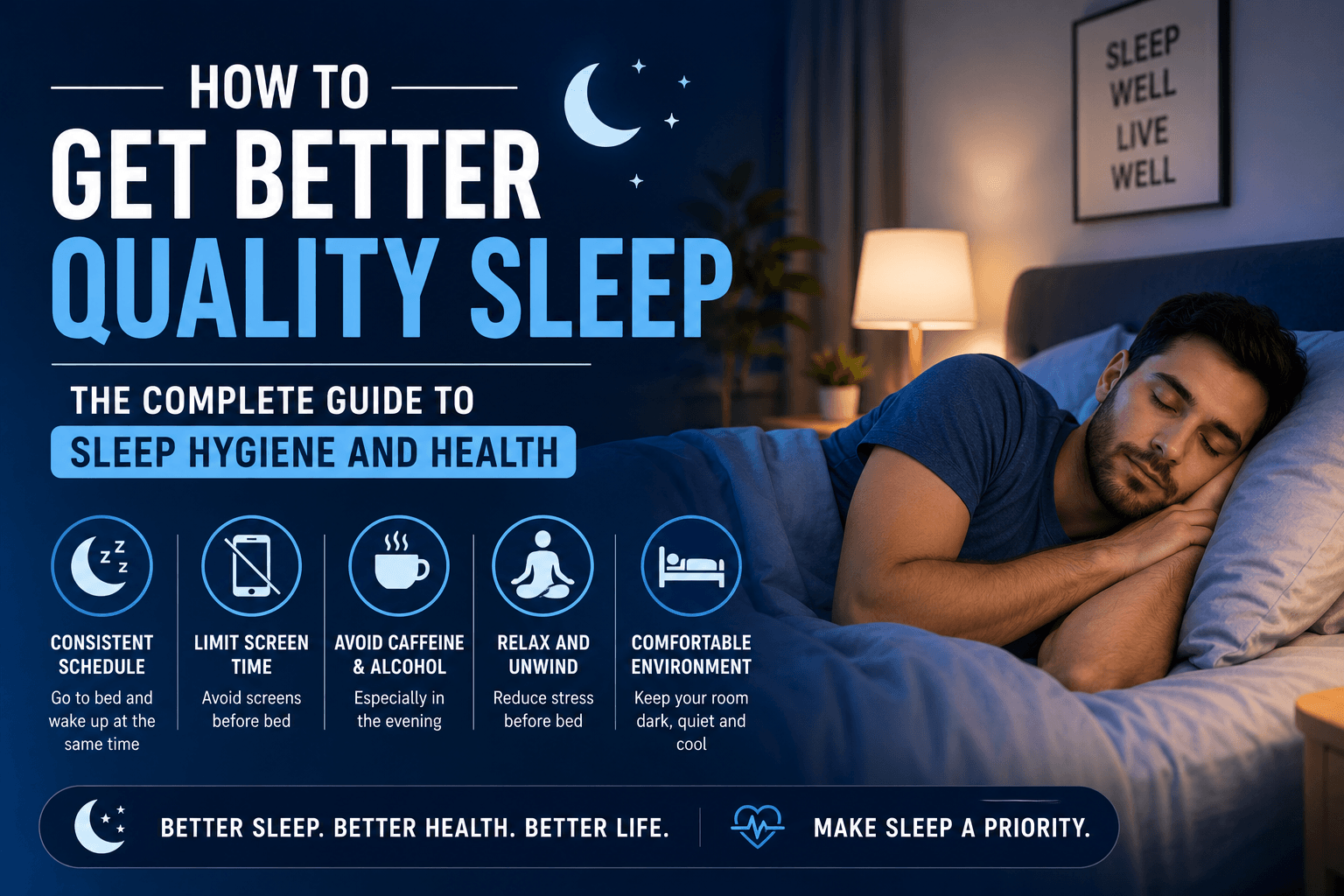
Your sleeping environment itself also matters significantly. Making your bedroom as dark as possible using blackout blinds or curtains helps stimulate melatonin production and signals to your body that it is time to sleep. A dark, quiet, and cool bedroom creates the optimal conditions for deep, restorative sleep.
The Importance of a Consistent Sleep Schedule
Your body operates on a circadian rhythm — an internal biological clock that regulates your sleep-wake cycle over a roughly 24-hour period. This rhythm is most effective when it is consistent. Going to bed and waking up at the same time every day — including weekends — reinforces your body’s natural sleep-wake cycle and makes it significantly easier to fall asleep at night and wake up feeling refreshed in the morning.
Sleeping in late on weekends to compensate for weekday sleep deprivation — a pattern sometimes called social jetlag — actually disrupts your circadian rhythm and can make weekday sleep quality worse over time. If you are tired after a poor night of sleep, a short afternoon nap of 20 to 30 minutes is a more effective recovery strategy than sleeping in, as it allows you to rest without significantly shifting your internal clock.
Natural Remedies That Support Better Sleep
Several natural approaches can meaningfully support sleep quality without the side effects associated with pharmaceutical sleep aids. Herbal teas — particularly chamomile, peppermint, and spearmint — have mild calming properties that can help the body and mind transition into a more relaxed state before bed. Chamomile in particular has been used for centuries as a natural sleep aid and is widely recognized for its gentle sedative effect.
Warm baths taken in the hour before bedtime can also be highly effective for improving sleep quality. The rise in body temperature during the bath followed by the gradual cooling afterward mimics the natural drop in body temperature that occurs as you fall asleep, helping to induce feelings of drowsiness. Adding magnesium salts to a bath provides an additional benefit — magnesium helps push calcium out of the muscles, allowing them to relax, and has a natural calming effect on the nervous system by reducing the excitability of neurons in the brain. Magnesium is frequently recommended as a natural supplement for improving sleep quality, and many people who struggle with sleep find it genuinely helpful.
Melatonin supplements are another evidence-supported option for people who have difficulty falling asleep or adjusting to a new sleep schedule. Melatonin is not a sedative in the traditional sense — it works by reinforcing your body’s natural sleep-wake signals rather than forcing sleep. For this reason, it is generally considered safer than prescription or over-the-counter sleeping pills for short-term use, though consulting a healthcare professional before beginning any supplement regimen is always recommended.
The Role of Exercise in Sleep Quality
Regular physical activity is one of the most consistently effective lifestyle interventions for improving sleep quality. Exercise reduces stress hormones, promotes physical tiredness, and supports the deeper sleep stages that are essential for physical and mental recovery. Even moderate exercise — such as a brisk daily walk — can produce meaningful improvements in sleep quality over time.
The timing of exercise relative to bedtime does matter for some people. Intense exercise close to bedtime can temporarily increase alertness and make it harder to fall asleep, as the stimulating effects of vigorous activity can take several hours to subside. If you find that evening workouts interfere with your ability to fall asleep, try shifting your exercise to the morning or early afternoon. However, this varies significantly between individuals — some people sleep perfectly well after evening exercise. Experimenting with timing and paying attention to how your body responds will help you find the approach that works best for you.
Sleep, Skin Health, and Overall Appearance
The connection between sleep quality and physical appearance is real and well-documented. During deep sleep, the body produces human growth hormone and undertakes cellular repair processes that directly benefit skin health. Collagen production, cell turnover, and tissue regeneration all occur predominantly during sleep. Consistently poor sleep quality accelerates the visible signs of aging, contributes to dull and uneven skin tone, and makes dark circles and puffiness more pronounced.
Achieving great-looking skin and achieving great overall health are not separate goals — they are the same goal approached from different directions. And one of the most powerful ways to pursue both simultaneously is by prioritizing not just more sleep, but genuinely better quality sleep.
Conclusion
Better quality sleep is not a luxury — it is a foundation of good health, mental wellbeing, and physical appearance. By managing your diet in the evening, avoiding alcohol and stimulants before bed, reducing screen exposure, maintaining a consistent sleep schedule, optimizing your sleep environment, and incorporating natural sleep-supporting habits into your routine, you can dramatically improve the quality of the sleep you get — and the quality of the life you live as a result. Start with one or two changes tonight, and build from there. The benefits will compound over time in ways that touch every aspect of your health and wellbeing.
This article is for general information only and is not medical advice. If you have ongoing trouble sleeping, loud snoring, pauses in breathing during sleep or excessive daytime sleepiness, speak to a doctor, as these can be signs of a sleep disorder.
About the Author