
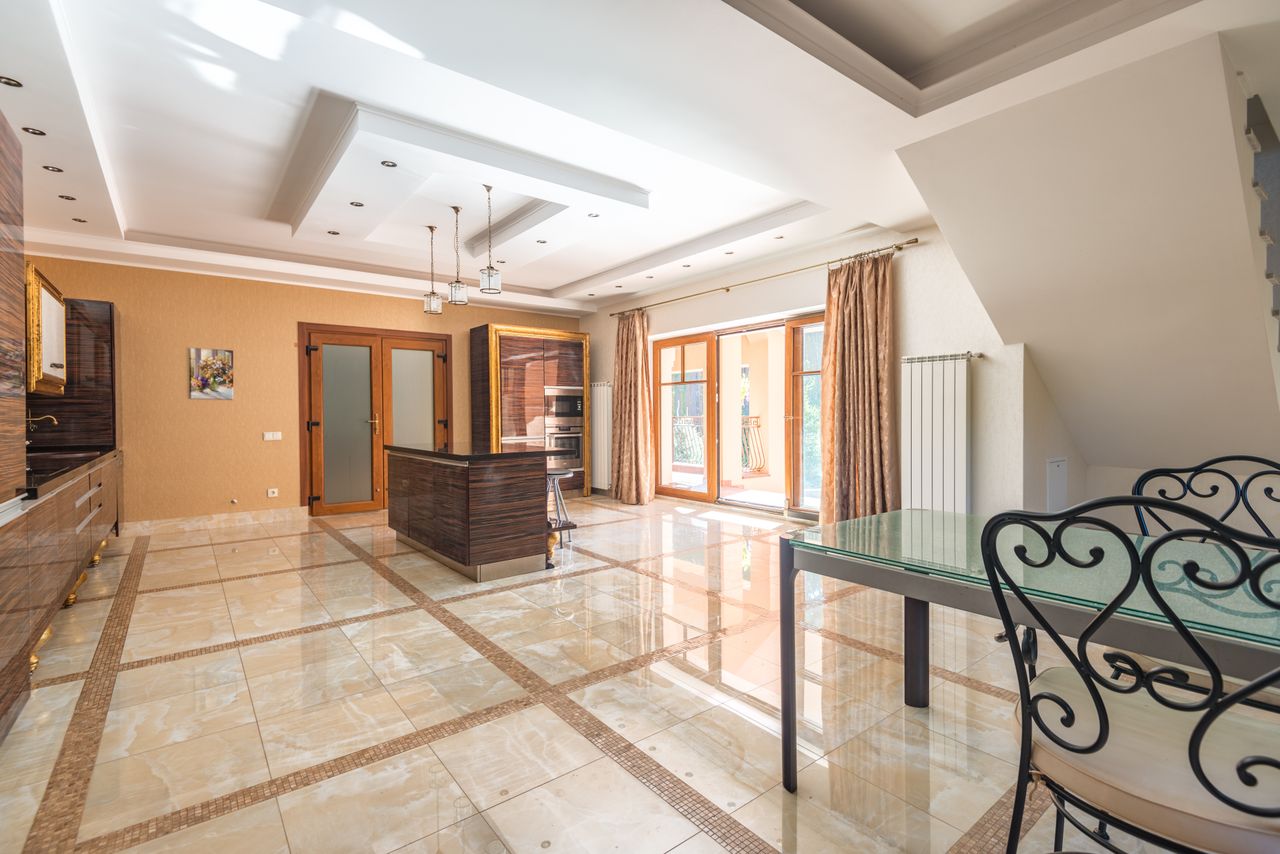
5 Ways to Make Your Interior House Look Luxurious Without Breaking the Bank
A luxurious home interior is something most people dream about but assume requires an enormous budget and a professional interior designer. The truth, however, is far more accessible than that. Creating a space that feels genuinely high-end, sophisticated, and beautifully appointed is less about how much money you spend and more about the choices you make — the materials you select, the way you layer elements, the details you pay attention to, and the overall sense of intentionality you bring to your home’s design. Whether you are starting from scratch or looking to elevate the look of your existing space, these five proven strategies will help you make your interior house look luxurious in a way that feels effortless, cohesive, and enduringly stylish.
1. Invest in High-Quality Curtains and Window Treatments
Nothing transforms the perceived quality of a room quite as dramatically as the right window treatments. Curtains and drapes are one of the most overlooked elements of interior design, yet they have an outsized impact on how luxurious a space feels. Cheap, thin curtains that barely cover the window and hang limply from a basic rod immediately signal a lack of care and investment. By contrast, full, floor-length curtains in a quality fabric instantly elevate the entire room — adding height, drama, texture, and a sense of thoughtful refinement.
For a truly luxurious look, choose curtains that hang from ceiling to floor rather than just covering the window frame. This simple change creates the illusion of higher ceilings and makes the room feel larger and more grand. Opt for fabrics with weight and texture — velvet, linen, silk, or heavy cotton all convey quality in a way that sheer or synthetic fabrics simply cannot. Choose colours that complement your existing palette: deep jewel tones like navy, forest green, and burgundy add richness and depth, while soft neutrals like ivory, warm grey, and champagne create an understated elegance that reads as effortlessly expensive.
Hang your curtain rods as close to the ceiling as possible, and ensure your curtains are wide enough to gather generously when open — a rule of thumb is to use curtains that are two to three times the width of the window for a full, luxurious drape. These details cost nothing extra but make an enormous difference to the final result.
2. Focus on Lighting — Layers, Warmth, and Statement Fixtures
Lighting is the single most powerful tool in interior design, and it is the element that most distinguishes truly luxurious spaces from merely well-furnished ones. The difference between a room that feels warm, intimate, and sophisticated and one that feels flat and uninspiring is almost always a function of lighting. Yet it is an element that many homeowners address as an afterthought rather than a priority.
The key to luxurious lighting is layering. Relying on a single overhead light source — particularly a harsh, bright overhead light — creates a flat, institutional feel that no amount of expensive furniture can overcome. Instead, build a lighting scheme that combines at least three layers: ambient lighting for overall illumination, task lighting for functional areas like reading nooks and kitchen countertops, and accent lighting to highlight artwork, architectural features, and decorative objects.
Statement light fixtures are one of the most cost-effective ways to add genuine luxury to a room. A beautiful chandelier, an oversized pendant light, or a sculptural floor lamp immediately becomes a focal point that elevates the entire space around it. You do not need to spend thousands on designer lighting — many affordable options deliver the visual impact of much more expensive pieces. The fixture itself sends a powerful signal about the care and intention behind the room’s design.
Pay close attention to the warmth of your light sources as well. Warm white bulbs with a colour temperature of around 2700K to 3000K create the soft, flattering glow that characterises the most inviting and luxurious interiors. Harsh cool white or blue-toned lighting, by contrast, undermines even the most carefully considered design scheme.
3. Embrace a Curated, Less-Is-More Approach to Decor
One of the clearest markers of a truly luxurious interior is restraint. High-end spaces are characterised by carefully chosen pieces displayed with intention and breathing room — not cluttered surfaces, crowded shelves, and an accumulation of mismatched decorative objects. If your home currently feels busy or overwhelming rather than calm and sophisticated, the solution is often not to add more but to remove.
Adopt a curatorial mindset when it comes to your decorative objects. Instead of displaying everything you own, select a smaller number of pieces that you genuinely love, that are visually interesting, and that work together as a cohesive collection. Group objects in odd numbers — typically threes or fives — and vary the heights and textures within each grouping to create visual interest without clutter. Leave generous negative space on surfaces and shelves, as this empty space is what gives your chosen pieces room to breathe and be properly appreciated.
Quality always trumps quantity in luxury interior design. One beautifully made ceramic vase, a carefully chosen piece of artwork, or a well-crafted sculptural object will always make a stronger statement than a shelf full of inexpensive trinkets. As you edit your space, be honest about what is genuinely adding to the room and what is simply occupying space out of habit or sentiment.
4. Incorporate Rich Textures and Layered Soft Furnishings
Texture is the element of interior design that most directly engages our senses and creates the physical sensation of luxury. The most expensive-looking and feeling interiors are invariably those that layer multiple textures in a way that feels rich, complex, and inviting — the visual softness of a velvet throw against a linen sofa, the warmth of a wool rug on a hardwood floor, the cool smoothness of marble against the organic warmth of natural wood.
Soft furnishings are one of the most accessible and transformative ways to add texture and luxury to your home. Invest in high-quality cushions and throws for your sofas and armchairs, choosing fabrics like velvet, boucle, cashmere, or chunky knit that feel as good as they look. Layer your bed with a mix of textures — crisp cotton sheets, a textured duvet cover, an oversized throw, and a generous arrangement of cushions in complementary fabrics and tones. The layered bed is one of the hallmarks of luxury hotel aesthetics that is entirely replicable at home with the right combination of textiles.
Rugs are another transformative textural element that anchor a room and add immediate warmth and sophistication. A large, well-chosen rug that extends generously beyond the footprint of your furniture grouping makes a room feel more considered and complete. Natural fibre rugs in wool, jute, or sisal add organic texture and subtle pattern, while plush pile rugs in neutral tones create the soft underfoot luxury associated with high-end hotel suites.
5. Upgrade Your Hardware, Fixtures, and the Small Details
In luxury interior design, it is the details that make the difference. Experienced interior designers know that the quality of a space is communicated as much through its smallest elements as through its largest furniture pieces — and one of the most impactful and surprisingly affordable ways to elevate your home’s interior is to upgrade the hardware, fixtures, and finishing details that you interact with every day.
Cabinet handles and drawer pulls are a prime example. Swapping out cheap plastic or basic chrome hardware for brushed brass, matte black, or unlacquered bronze alternatives is a relatively inexpensive change that makes an immediate and visible difference to the quality feel of a kitchen, bathroom, or bedroom. The same principle applies to door handles, light switch plates, towel rails, and bathroom fixtures — each of these small touchpoints either reinforces or undermines the overall sense of quality in a space.
Mirrors are another detail that luxury interiors use strategically and effectively. A well-placed, beautifully framed mirror does double duty — it reflects light and makes a space feel larger, while simultaneously adding a decorative element that conveys style and intentionality. Large floor mirrors leaning against a wall, ornate framed mirrors above a fireplace or console table, and clusters of smaller mirrors arranged as a gallery wall are all effective approaches that immediately add a sense of glamour and sophistication.
Finally, pay attention to scent. The most memorable and immersive luxury spaces engage all the senses, and scent is one of the most powerful and most often neglected. A quality reed diffuser, a set of beautiful candles, or fresh flowers placed thoughtfully around your home creates an atmosphere that no amount of furniture or decoration alone can replicate. The olfactory experience of entering a space that smells clean, warm, and subtly fragrant is one of the most immediate and powerful signals of genuine luxury.
Conclusion
Making your interior house look luxurious does not require a complete renovation, a designer budget, or an entirely new set of furniture. It requires attention, intention, and a willingness to make thoughtful choices about the elements that have the greatest impact on how a space feels. Invest in full-length, quality curtains. Layer your lighting thoughtfully and choose statement fixtures. Edit your decor to a curated selection of pieces you genuinely love. Build richness through layered textures and quality soft furnishings. And pay close attention to the small details — the hardware, the mirrors, the scent — that collectively communicate the quality and care you have invested in your home. Apply these five strategies consistently, and your interior will convey a level of luxury that feels both effortless and entirely your own.
About the Author