What Is Banda Music?
If you’ve ever been to a Mexican wedding or scrolled through Latin music charts, you’ve likely encountered banda music—a thundering, brass-heavy sound that fills dance floors from Sinaloa to Los Angeles. At its core, banda is a regional Mexican genre built around large ensembles of wind and percussion instruments, with no electric guitars or strings to dilute its punchy, full-bodied tone.
A typical banda group features anywhere from 10 to 20 musicians, layering trumpets, trombones, clarinets, and tubas over driving percussion. The result is a sound that’s loud, celebratory, and unmistakably Mexican. Vocalists sing romantic ballads, rancheras, corridos, and cumbias, all supported by that signature wall of brass.
While people sometimes lump banda together with mariachi or norteño, the genres are distinct. Mariachi relies heavily on violins and guitars, and norteño is built around the accordion and bajo sexto. Banda, by contrast, is a pure Mexican brass band tradition—no strings, no accordion, just horns and drums driving every song forward.
The Origins and History of Banda
Banda traces its roots back to 19th-century Sinaloa, a state on Mexico’s Pacific coast. During that era, waves of European immigrants—especially Germans, Poles, and Italians—settled in the region, bringing with them military marching band traditions, polkas, and waltzes. Local Mexican musicians embraced these brass-heavy formats and reshaped them with indigenous and mestizo rhythms.
By the late 1800s, small village bands were performing at religious festivals, town squares, and private parties throughout Sinaloa. These early ensembles were rural and informal, often passed down through families. As Mexico modernized in the 20th century, banda groups grew larger and more professional, eventually touring nationally and recording commercial albums.
Immigration also played a huge role in spreading the genre. As Sinaloans moved north to the United States, especially to California and Arizona, they carried banda sinaloense with them. This cross-border cultural exchange transformed banda from a regional folk style into a major commercial force across North America.
Instruments That Define the Banda Sound
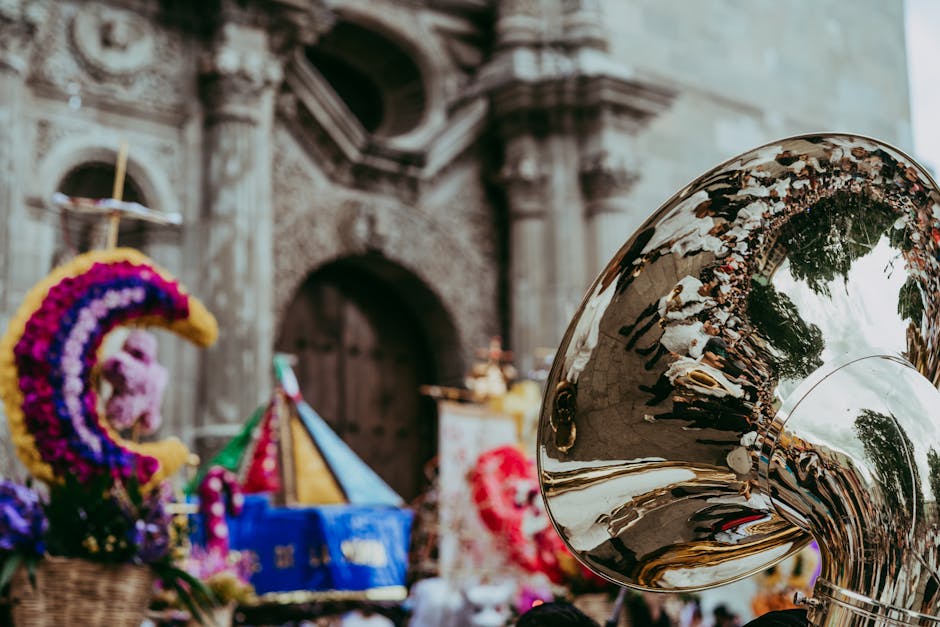
The banda instruments are what give the genre its unmistakable identity. The brass section is the backbone, featuring trumpets that carry melody lines, trombones that add harmonic depth, and the sousaphone or tuba—often called the “tambora bass”—which lays down the booming low end.
Woodwinds also play a starring role. Clarinets typically handle ornate melodic runs and countermelodies, giving banda a sweeter, more agile sound than purely brass ensembles. Some groups add saxophones for extra texture, especially in modern recordings.
The percussion section is anchored by the tambora, a large double-headed drum played with mallets, and the tarola, a snare drum that drives the rhythm. Together, they create the propulsive beat that makes banda so danceable.
Why No Strings?
The absence of guitars and violins is a key feature that separates banda from mariachi. This all-acoustic-wind approach gives banda its raw power—it can fill a plaza or stadium without amplification, which is exactly how it started.
Popular Subgenres and Styles
Banda isn’t a single, frozen style. Over the decades, it has branched into several subgenres, each reflecting different eras and tastes.
Banda Sinaloense
This is the traditional, foundational style—often considered the gold standard. Banda sinaloense emphasizes acoustic instruments, tight horn arrangements, and classic rhythms like the polka, waltz, and bolero. Groups like Banda El Recodo helped codify this sound for global audiences.
Technobanda
In the late 1980s and early 1990s, technobanda exploded across Los Angeles and Mexico. By swapping some acoustic horns for electric keyboards, synthesizers, and electric bass, technobanda gave the genre a faster, sleeker, more youth-oriented feel. It also sparked the quebradita dance craze that swept Mexican-American communities.
Banda Romántica and Modern Fusions
Today, banda romántica dominates the airwaves with slow, lovelorn ballads sung over lush brass arrangements. Newer artists are also blending banda with corridos tumbados, trap beats, and even reggaeton, keeping the genre fresh for streaming-era listeners.
Iconic Banda Artists and Groups
No conversation about banda is complete without Banda El Recodo, founded in 1938 by Don Cruz Lizárraga. Often called “the mother of all bandas,” the group has recorded hundreds of albums and trained generations of musicians.
Banda MS, formed in 2003 in Mazatlán, has become arguably the biggest banda act of the 21st century, racking up billions of streams with hits like “Hermosa Experiencia” and “El Color de Tus Ojos.” Their polished sound and romantic lyrics helped bring banda to a new generation.
Solo vocalists backed by banda have also shaped the genre. The late Jenni Rivera became a cultural icon, breaking gender barriers in a male-dominated scene. Julión Álvarez, Christian Nodal (who blends mariachi and banda), and newer voices like Ángela Aguilar continue the tradition while pushing it forward.
Cultural Significance of Banda
Banda is far more than entertainment—it’s a centerpiece of Mexican social life. At weddings, quinceañeras, baptisms, and birthday parties, hiring a live banda is the ultimate sign of celebration. The music signals joy, family, and community.
The genre also carries enormous regional pride, particularly in Sinaloa, where it’s considered an essential part of cultural identity. Among Mexican-Americans in the U.S., banda serves as a powerful link to heritage and homeland.
Its influence extends to fashion—think cowboy hats, boots, tejana belts, and embroidered shirts—and to dance, especially the quebradita, a rodeo-inspired partner dance that became a 1990s phenomenon. Banda has also seeped into broader Latin pop culture, influencing telenovelas, films, and even fashion runways.
Banda’s Global Reach and Future
Banda is no longer a strictly regional phenomenon. The genre regularly tops Billboard’s Regional Mexican and Latin charts, and groups like Banda MS sell out arenas across the United States, Latin America, and Europe. Streaming platforms have amplified its reach, with Spotify and YouTube introducing banda to listeners who might never have encountered it on traditional radio.
Collaborations are also expanding the genre’s borders. Banda artists have teamed up with reggaeton stars, pop singers, and even hip-hop producers, creating hybrid tracks that pull millions of streams. Snoop Dogg, Becky G, and Christian Nodal have all participated in banda-influenced crossovers.
The future looks bright. Younger artists are reinterpreting banda through TikTok-friendly hooks and genre-bending production, ensuring the tradition stays alive without losing its soul. As long as there are parties to throw and stories to tell, the brass will keep blaring.
Practical takeaway: If you want to truly understand banda, start by listening to a classic Banda El Recodo album, then jump to Banda MS for the modern sound, and finally explore newer crossover tracks. You’ll hear an entire century of Mexican culture in just a few hours of music—and you might just find yourself looking for the nearest dance floor.
About the Author